Tire Repair in Alcoa, TN: Patch, Plug, or Replace?
You hear a thump. You find a nail or screw. Then the TPMS light comes on.
Oops… a small puncture can become a serious tire problem if you keep driving on it. The right next step depends on where the damage is, how large it is, how much tread remains, and whether the tire suffered internal damage.
This guide explains when a tire may be repaired, when it needs to be replaced, and what to expect from a professional tire repair in Alcoa, TN.
SE HABLA ESPAÑOL. Universal Tire Tire Center is a family-owned local shop serving drivers throughout Alcoa with tire inspections, flat repairs, balancing, rotations, and TPMS services.
FIRST: DON’T KEEP DRIVING ON A LOW TIRE
A slow leak is still a leak. Driving for an extended time with low pressure creates extra heat and flex inside the tire. That can damage the sidewall and internal belts, even if the original nail or screw is located in the tread.
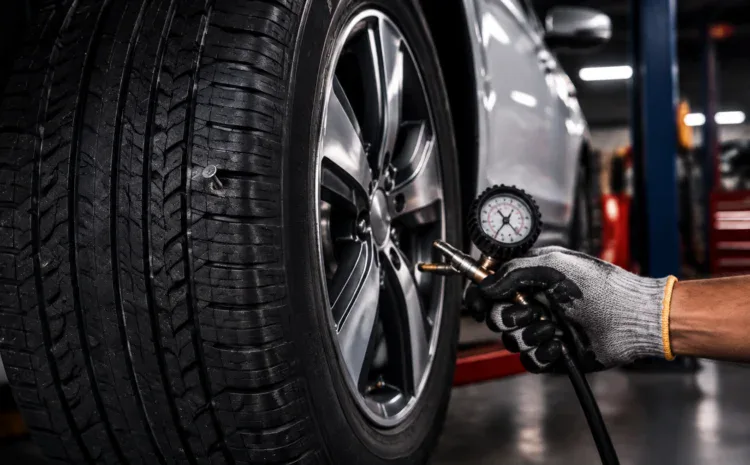
If your TPMS warning light turns on:
- Check the tire pressure with a gauge as soon as possible.
- Compare the reading with the vehicle manufacturer’s recommended pressure.
- Look for a nail, screw, cut, bulge, or visibly low sidewall.
- Avoid highway driving if the tire is significantly underinflated.
- Do not remove a nail or screw before the tire is inspected.
- If the tire is flat, use a spare or arrange assistance instead of driving on it.
The TPMS light may indicate low air pressure, a sensor issue, or both. A warning light should not be ignored. Our tire and TPMS services include pressure checks, tire inspections, flat tire repair, and TPMS sensor diagnostics.
IS THE PUNCTURE IN A REPAIRABLE AREA?
The first decision is location.
A tire puncture may be repairable when it is:
- In the center area of the tread.
- Small enough to meet industry and manufacturer repair limits.
- Away from the shoulder and sidewall.
- Not overlapping another repair.
- On a tire that has not been driven flat or severely underinflated.
For passenger and light-truck tires, industry guidance commonly limits repairs to punctures no larger than 1/4 inch, or 6 millimeters. A technician must still follow the tire manufacturer’s specific repair policy.
CENTER TREAD: POSSIBLY REPAIRABLE
A nail or screw in the middle of the tread is the most likely type of puncture to qualify for repair.
That does not mean every center-tread puncture can be repaired. The tire must be removed from the wheel and inspected inside and out. The technician also needs to check the puncture’s size, angle, location, and condition.
SHOULDER OR SIDEWALL: REPLACE THE TIRE
The shoulder is the curved transition between the tread and sidewall. It flexes heavily while the vehicle is moving.
Punctures, cuts, bulges, and tears in the shoulder or sidewall are generally not safely repairable on highway tires. A patch or plug may not withstand the constant flexing in these areas.
A tire with sidewall damage should be replaced. Do not rely on an external repair kit for a road-going vehicle.
CHECK TREAD DEPTH AND OVERALL CONDITION
A puncture repair only makes sense if the tire still has useful life left.
A tire should not be repaired when the tread is worn to the treadwear indicators or approximately 2/32 inch of remaining tread depth. Worn tread reduces wet-road traction and may make the tire unsuitable for continued service.
A professional inspection should also look for:
- Uneven wear.
- Exposed cords or belts.
- Cracks from age or weathering.
- Flat spots.
- Bulges or impact damage.
- Bead damage near the wheel.
- Previous repairs that overlap.
- Multiple punctures close together.
If the tire is worn, damaged, or already near the end of its service life, replacement is usually the safer use of your money.
Don’t see your size? Universal Tire Tire Center offers both new and professionally inspected used tires. You can also review our guide to used tires in Alcoa, TN before making a decision.
PATCH, PLUG, OR PATCH-AND-PLUG?
The words “patch” and “plug” are often used interchangeably. They are not the same repair.
AN EXTERNAL PLUG IS A TEMPORARY MEASURE
A rope-style plug is pushed into the puncture from the outside. It can help stop air loss temporarily, but it does not allow the technician to inspect the inside of the tire.
A plug-only repair may fail to seal the inner liner correctly. It may also allow moisture to reach the tire’s internal steel belts. For these reasons, an external plug should not be treated as the final repair for a highway tire.
A PATCH ALONE IS NOT ENOUGH
An internal patch seals the inner liner, but a patch by itself may not fill the puncture channel left by the nail or screw. That open channel can allow air or moisture to move through the tire structure.
THE PROPER REPAIR IS AN INTERNAL PATCH-AND-PLUG
When a tire qualifies for repair, the recommended process uses a combination repair unit:
- The tire is demounted from the wheel.
- The inside and outside are inspected.
- The puncture is measured and prepared.
- A rubber stem fills the puncture channel.
- An internal patch seals the inner liner.
- The tire is remounted and checked for leaks.
- The wheel may be balanced before returning to service.
This is why a professional tire shop needs time to remove and inspect the tire. As the Tire Industry Association explains, on-the-wheel string plugs do not provide the complete inspection and repair process needed for a permanent repair.

WHY THE INSIDE OF THE TIRE MATTERS
A nail may look harmless from the outside. Inside the tire, however, it may have caused more damage than you can see.
A tire technician needs to inspect for:
- Inner-liner damage.
- Scuffing from driving underinflated.
- Sidewall flex damage.
- Belt separation or exposed cords.
- A puncture channel that is too large or irregular.
- Evidence of a previous improper repair.
If the tire was driven while flat or very low, internal damage may make it unsafe to repair. The visible hole may be repairable, but the tire’s internal structure may no longer be reliable.
That is the main reason a quick plug is not always the right answer.
WHEN REPLACEMENT IS THE SAFER CHOICE
A tire generally needs to be replaced instead of repaired when:
- The puncture is in the sidewall or shoulder.
- The hole is larger than the accepted repair limit.
- The damage is close to or overlaps another repair.
- Multiple punctures are too close together.
- The tire was driven flat or severely underinflated.
- The tread is at or below the wear indicators.
- There are bulges, exposed cords, cuts, or cracking.
- The tire has internal damage.
- The tire type or manufacturer does not permit the proposed repair.
Run-flat and low-profile tires deserve extra attention. Their construction and handling characteristics can differ from standard tires. A run-flat may hide the feeling of low pressure, while a low-profile tire may suffer wheel or sidewall damage after a pothole impact. Follow the tire manufacturer’s guidelines and have the tire professionally inspected.
If replacement is necessary, compare the correct size, load rating, speed rating, and tire type for your vehicle. Our new tires in Alcoa, TN service can help you select an appropriate replacement without guessing.
WHAT TO EXPECT AT A LOCAL TIRE SHOP
At Universal Tire Tire Center, we inspect the tire before recommending a repair or replacement. We do not assume that every nail means a new tire, and we do not treat every puncture as a simple plug.
Our related services include:
- Tire inspection.
- Flat tire repair.
- Tire balancing.
- Tire rotation.
- TPMS diagnostics.
- New and professionally inspected used tires.
- Free brake inspections.
Walk-ins are welcome for minor services when availability allows. Appointments are recommended for larger jobs, multiple tires, wheel work, or repairs that require more shop time.
When you purchase a qualifying set of new tires, our policy includes FREE LIFETIME TIRE ROTATION, BALANCING, FLAT REPAIR, AND TIRE INSPECTION. Ask our team for the current qualifying details.
Regular maintenance also matters. A tire rotation in Alcoa, TN can help promote more even tread wear, while balancing may help address vibration after tire installation or when weights are missing.
THE BOTTOM LINE: INSPECT FIRST, THEN DECIDE
A nail or screw in the center of a healthy tire may be safely repairable with a professional internal patch-and-plug. A puncture in the shoulder or sidewall, a worn tire, or a tire driven while flat usually calls for replacement.
Do not ignore a slow leak or TPMS warning. The longer a tire runs underinflated, the greater the chance of internal damage.
For dependable tire repair in Alcoa, TN, visit Universal Tire Tire Center. We are locally owned, focused on transparent recommendations, and dedicated to keeping Alcoa drivers safe.
Universal Tire Tire Center
209 S Hall Rd, Alcoa, TN 37701
Phone: 865-268-5618
MONDAY–SATURDAY: 8:00 AM–6:00 PM
CLOSED SUNDAY
ENGLISH AND SPANISH SPOKEN
Walk in for minor tire services or contact us to schedule a larger job.